A Salesforce contract is a list of lines: products, quantities, rates. The orgs that consume it are measured somewhere else entirely, in licence pages, login histories and event logs. Renewal is the one moment the two are supposed to meet, and it usually happens on a spreadsheet assembled the week before.
Link every line to the licences it buys
The first step is the mapping: each contract line linked to the org licences it pays for. A seat SKU maps to a user licence in one or several orgs; an add-on maps to a permission set licence; a consumption product maps to its credit line. Once mapped, each product reads as one row with five numbers: contracted, provisioned in the org, assigned, logged in, and actually writing business records.
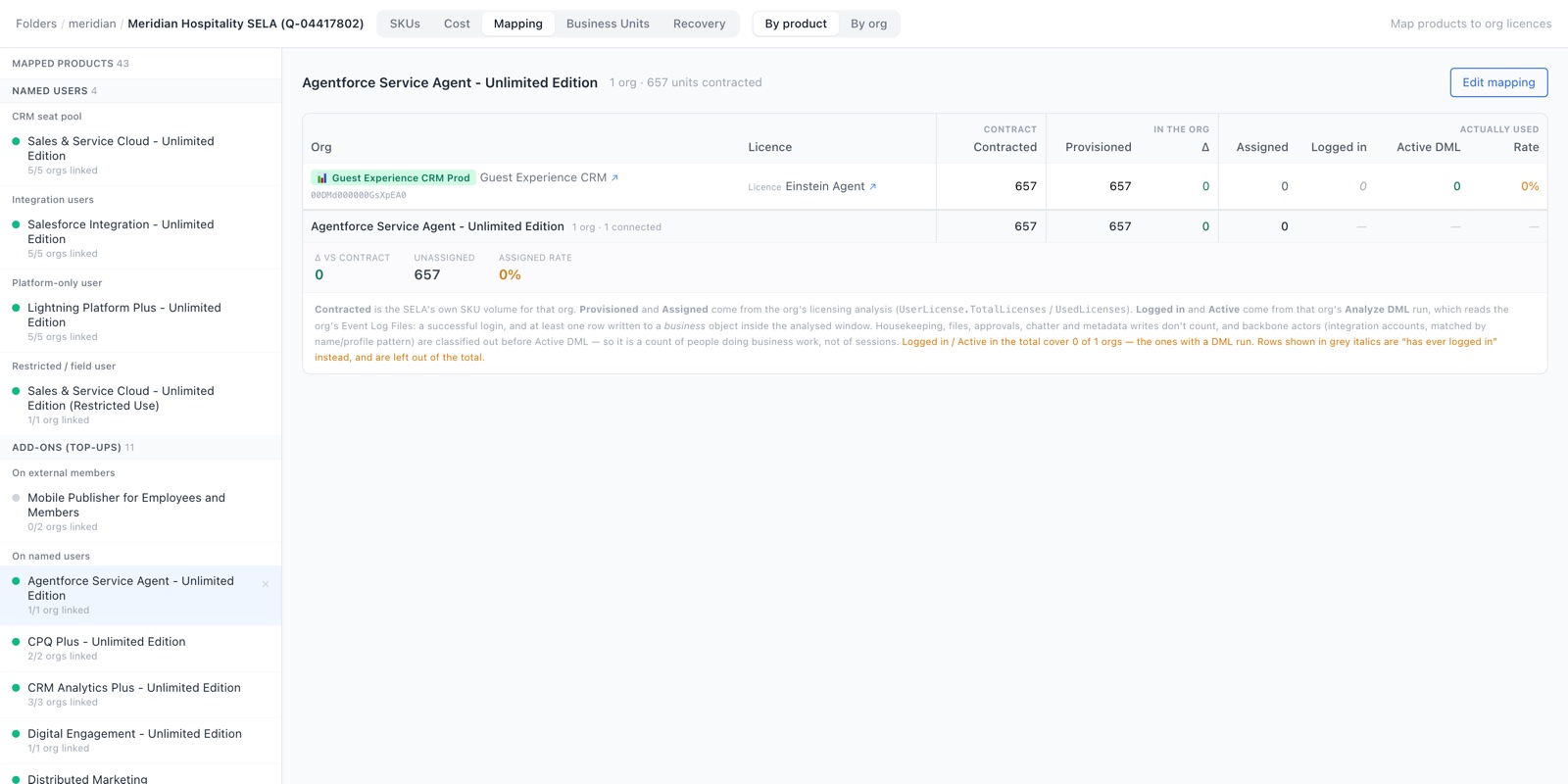
In the demonstration estate, one line stands out on that row alone: 657 Agentforce agent seats contracted and provisioned, none assigned. That gap is not an estimate. It is the contract quantity, set against the org’s own licence count, on the org the line was mapped to.
Price every bucket against the start of the contract
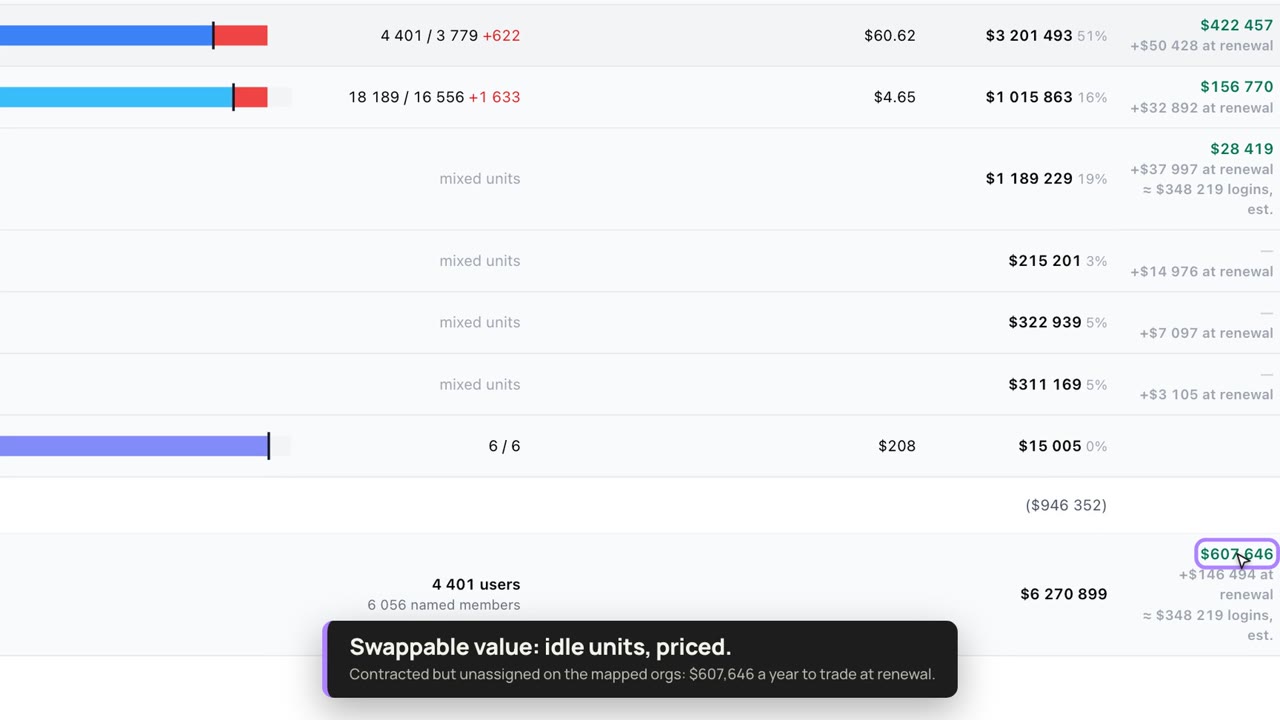
The cost view prices the whole contract bucket by bucket: named users, add-ons, external users, integration infrastructure, Marketing Cloud, AI and Data Cloud. Each bucket sets the units held now against Schedule A, the quantities at signature, so additions and give-backs read as what they cost on the contract’s own line prices.
The swappable column is the renewal brief
Swappable is the value of units contracted but not assigned, on the orgs where the product is mapped, at its line price per year. An unmapped org counts as unknown, never as idle. Capped by your own swap rules, it is the room you have to trade idle products for the ones you need, before anyone discusses a discount.
Where to go next
The usage and cost page shows how the contract sits beside the licence cascade, and the documentation covers SELA contracts in detail.
Figures are from the synthetic Meridian demonstration estate, not customer results.