Stood Flows · epics · ROI

From a row in the matrix to a line in the budget

A finding is worth nothing until it is owned, priced and removed. Stood Flows files findings into epics and prices them against the CRM budget, so the backlog reads as a business case before anyone opens Setup.

statusissues and epics · 1.3.0folder dashboard · 1.2.8 → 1.3.0docsIssue Management Multi-org KPI dashboard SELA contractsCapability atlas

Epics: a backlog that files itself

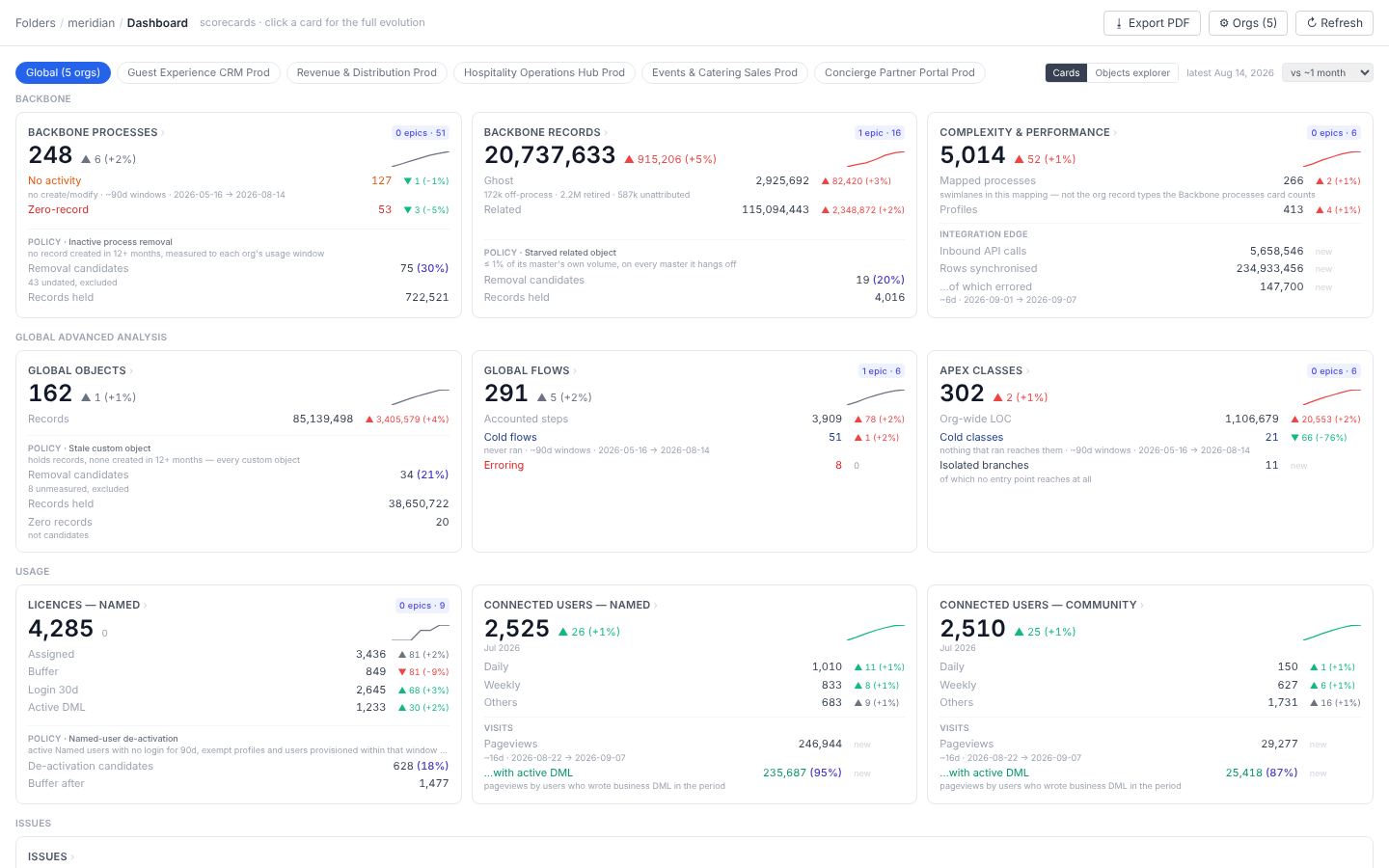
Three levels, one anchor. A dashboard card is a category (backbone processes, backbone records, global flows, Apex classes, licences). An epic is a folder-level intent: fifteen shipped, renameable, archivable, extendable by the customer. An issue is one finding on one graph, with a state, a criticality, and an invisible anchor that survives every refresh.

Issues · card → epic → issue → anchorSTOOD
Backbone processes card · 3 epics · 41 issues one of seven cards; the badge counts what is open underneath Qualify low-volume processes epic · folder-level · built-in, retitled "Processes carrying a handful of records: real configuration, almost no use." #214 · Eco Loyalty Booking holds 11 records issue · open → qualified → closed · criticality low filed by Auto-file from the Total column; labels quickwin synced two-way to GitHub or S3 when the folder shares anchor · invisible in the issue body · survives refreshes · powers "go to it" <!-- stood-anchor:graph=guestexp-prod, rt=012…Eco_Loyalty, col=total, obj=, name=Eco Loyalty Booking --> The (obj, col) pair is what the epic matcher reads: col=total files to volume epics, col=ghosts to ghost epics, obj=sfflow to flow epics, obj=apex to Apex epics. A customer's backlog files itself the same way the demonstration estate's does. Right-click any cell to file by hand; Auto-file does the rest. criticality from the stated volume · high ≥ 100,000 · medium ≥ 1,000 · errors at least medium
Shipped in 1.3.0 (three-state workflow, S3 sync, Auto-file). Fifteen built-in epics across seven cards; folder epics.json adds, renames or archives.

Pricing the backlog: three ledgers, one formula

"So what?" is a fair objection as long as debt is described by volume. It stops holding once debt is described by cost. The carrying cost of surface is surface × how often it is touched × how often it fails, and it lands in three ledgers that different people own.

ROI model · defaults from the published articleSTOOD
Ledger · cash

Euros leaving the IT budget

Licences first: seats contracted minus seats that wrote business data, at the contract unit rate, times what survives review. Storage next. Buffer is a negotiating position, priced as purchases avoided.

Ledger · capacity

Admin and engineer time

Run budget: incidents traced to debt, regression per release on dead surface, admin and integration effort. Build budget: the 20% debt tax on new work. Express as time first, then money.

Ledger · risk

Business value, owned by the business

Erroring automation, integration outliers, non-acting licences. Needs a unit value from the business owner, so it sits outside the model and gets its own budget line.

returned per year · €10M CRM budget
€1.92M
share of budget
19.2%
return on a €400k programme
4.8×
payback
2.5 mo

■ Licences €1.45M   ■ Run €268k   ■ Build €200k  ·  inputs: 4,720 seats contracted, 1,296 wrote business data (gap 73%), 40% dead surface, 40% survives review, 25% of incidents traced to debt.

Every number is yours to move: the model on stoodcrm.com is interactive, and Stood Flows supplies the inputs per org (seat gap from the licence cascade, dead surface from the matrix, erroring share from the Flows view). Rule for the order of work: delete when the cost of deleting is lower than one to two years of carrying cost.

Defaults from "Tech debt has a price", stoodcrm.com, September 2026. Licences are about three quarters of the return; risk is outside the model on purpose.
What this means on Monday. One backlog, priced. The objective does not change from one quarter to the next: less surface, same business, and a snapshot that proves it.

In the app

Captured from the application itself, built from the current source tree and opened read-only on the Meridian demonstration workspace.
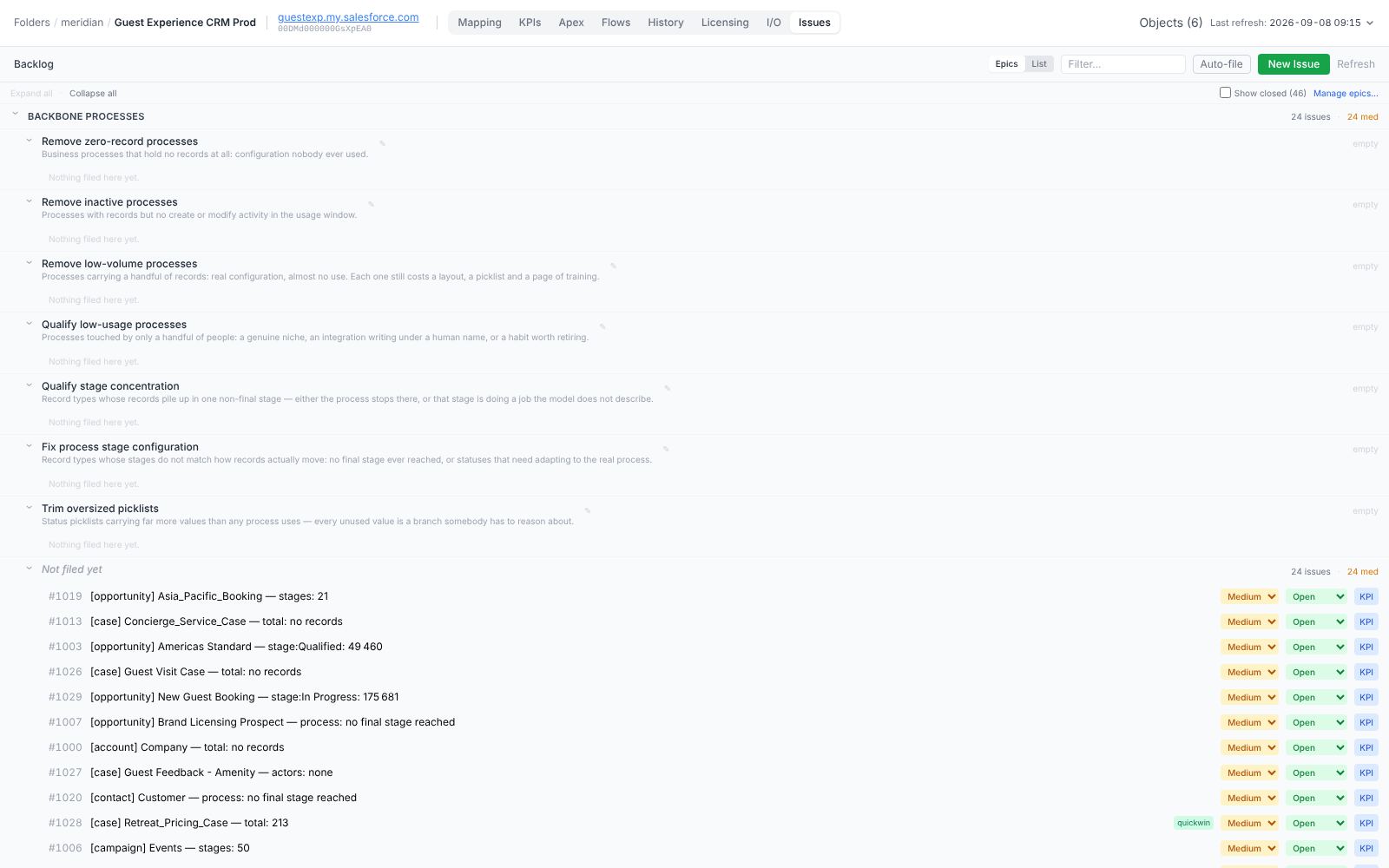
Issues → Epics: the tree of built-in and folder epics with their issues on the Meridian flagship org.
The folder dashboard, the deliverable: eight cards across five orgs with baselines and policy candidates.